
When most people hear the word “crown,” they picture a broken or chipped tooth that needs saving. And that’s certainly one of the most common reasons we recommend them. But a dental crown can do so much more than fix a damaged tooth.
At Irving Park Family & Cosmetic Dentistry, we’ve placed crowns for every imaginable reason. Some are purely functional. Some are purely cosmetic. And many are a little bit of both. Let’s look at the surprising ways a crown can improve your smile, and why it might be the right solution for you.
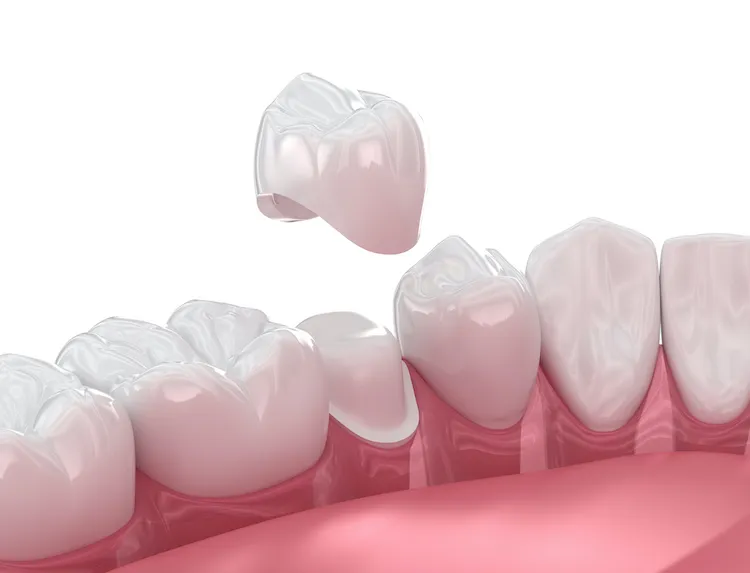
Crowns for Structural Repair
A crown is a custom-made cap that fits over your entire tooth, from the gum line up. It restores the tooth’s shape, size, strength, and appearance.
We recommend crowns when a tooth has been:
- Chipped or fractured
- Severely worn down from years of grinding
- A large filling has weakened the tooth structure, and it needs extra support. In cases like these, a crown acts like a protective helmet. It holds the tooth together and prevents further fracture.
Crowns are also essential after a root canal. Once the pulp is removed, the tooth becomes brittle and more prone to fracture. A crown seals it up and gives it the strength to handle normal biting and chewing again.
Crowns for Cosmetic Improvement
Crowns aren’t just for damaged teeth. They can also transform the appearance of teeth that are perfectly healthy but simply don’t look the way you want them to.
- Do you have a discolored tooth that hasn’t responded to whitening? A crown can cover it with a beautiful, natural-looking material that matches your other teeth.
- Do you have a tooth that’s misshapen or noticeably smaller than the rest? A crown can reshape it and balance it with your smile.
- Do you have a tooth with a large, dark filling that shows when you laugh? A crown can replace that filling with a seamless, tooth-colored restoration.
Dr. Zamora’s artistic background comes into play here. She pays close attention to the shape, shade, and translucency of every crown, making sure it blends beautifully with your natural teeth. Many patients tell us they can’t even tell which tooth has the crown.
Crowns for Dental Implants
Crowns also play a starring role in dental implant treatment. When we place an implant, the titanium post replaces the root of your missing tooth. But the post alone isn’t what you see when you smile. The visible part is the crown that sits on top.
Implant crowns are custom-made to match your other teeth in color, shape, and size. They’re designed to function just like a natural tooth, so you can bite, chew, and speak with complete confidence. With proper care, they’re also durable and long-lasting.
Crowns for Bridges
If you’re missing a tooth and don’t want an implant, a dental bridge might be an option. A bridge uses crowns on the teeth on either side of the gap to support an artificial tooth in between. Those supporting crowns anchor the entire restoration and keep it stable.
This is a great solution for patients who want to fill a gap without surgery. The crowns do double duty. They protect the supporting teeth while also holding the bridge in place.
Restore your Bite and Smile
Dental crowns are one of the most versatile tools in restorative and cosmetic dentistry. In the right situation, they can restore and improve your smile while looking completely natural. Dr. Langdon, with over fifty years of experience, has seen crowns evolve from noticeable metal restorations to the lifelike, durable works of art we use today. He often says a well-made crown is a small investment in a lifetime of smiles.
If you’re wondering whether a crown could help you, we’d love to take a look. Call our Cornwallis Drive office or request an appointment online. We’ll examine your smile, explain your options, and help you decide what’s best. Because whether your goal is function, beauty, or both, there’s a good chance a crown can help you get there.